
Power: Making Homelands Sustainable
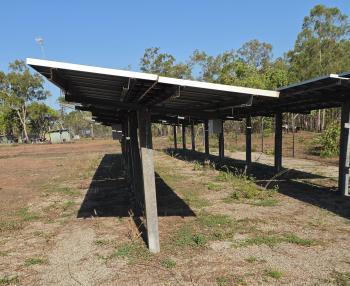
Homelands can be self sufficient through solar power saving tens of thousands of litres of diesel per annum
It is much easier to make a homeland’s power sustainable than a large town’s. This paper is written toward one aim: a homeland that can sustain itself, in power and in every other way, including food, transport, water and income. Power is the part it examines. The homelands of north-east Arnhem Land are Yolŋu places. Marthakal supports the homelands of its region, including Mata Mata, and Laynhapuy supports its own. They are not on the power grid of Nhulunbuy, and they are not on the diesel stations of the larger communities. What they have is a small hybrid: solar and batteries where a program has installed them, and a diesel generator for the loads the solar was never designed to carry. At Mata Mata that change is documented. People lived by firelight, then from the mid-1980s by diesel flown from Elcho Island, then from October 2005 by a Bushlight system on five houses and the school. By 2009 the community said the power was “running perfect.” Twenty years later the public record of homeland systems across the Territory is of equipment at the end of its design life, generators that often will not start, and a daily energy budget, where it can still be met, of about 10 kilowatt-hours a house. A third of systems can still do that. Four per cent can do what a recent study treats as enough for a reasonable livelihood. Meanwhile the mine and the town of Nhulunbuy run on a 26 megawatt diesel station, now with 10.5 megawatts of solar on Gumatj and Rirratjingu leases. This paper sets out what is known about generators, diesel, Bushlight and what fails, who is supposed to pay, and how that sits against the wealth of the Gove mine. Section 4 adds what I saw at Mata Mata in October 2026: a refurbished system, more than 100 people on five houses and tents, and a diesel generator running day and night through a funeral ceremony. On my rough estimates, re-panelling the array and adding lithium storage in four stages would cost about $450,000 to $700,000 and save about 20,000 litres of diesel, or about $80,000, a year at about $4 a litre delivered, paying for itself in about five to eight years. Each house would go from about 6 or 7 kilowatt-hours a day to roughly 30 or more. Its population rises and falls, from a core of 20 to 30 to more than 100, and 150 to 200 at funerals, and the system has to be built for that range. A speculative section asks whether the towns could ever be self-sufficient for power, and finds that the homelands have the better chance in absolute terms, while the towns are cheaper per kilowatt-hour. It is a first draft. Where the record is thin, it says so.
This paper is a companion to Planes, Roads, Automobiles (Botsman 2026) and to Where Gove’s money went (Botsman 2026b). It does not revisit the road or the royalty arithmetic except where power depends on them.¹ It links to the Mata Mata campaign on isx.org.au (https://www.isx.org.au/features/planes-roads-automobiles-and-boats).
The power paper is about 12,500 words including notes and bibliography, roughly 30 pages, with 7 photographs and 3 tables.
Downloadable files: