
Food: Diet and Nutrition on the Homelands
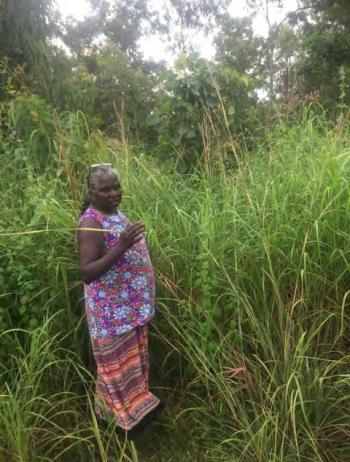
What people eat at Mata Mata and other north-east Arnhem Land homelands depends on the country and sea, the store and whether there is power to keep food cold.
A companion to the homelands power paper, this working paper looks at how families at Mata Mata and other north-east Arnhem Land homelands eat from country, sea and store, and references Neville White's work at Donydji. Working paper, 20 pages, about 7,900 words, with photographs and references.
Neville White has worked at Donydji, an inland Yolŋu homeland, for more than fifty years. In the early 1970s about 80 per cent of the food eaten there was wild food. Today almost all meat is still hunted and all fish caught, but only about a fifth of fruit and vegetables come from the bush. At Mata Mata, on the Arafura Sea, people still live on fish, maypal, turtle and dugong, and on bush fruits such as ŋäṉ'ka-bakarra, the Kakadu plum. The Arnhem Land Progress Aboriginal Corporation (ALPA) has made the stores better, more affordable and more Aboriginal-focused, and the paper asks what that change means for the homelands diet.
A recent walk through the forest with Mervyn Garrawitja and Marcus Gurruwiwi showed that the bush is still full of food, but the knowledge of it is being lost as people travel through the bush less. Twenty years ago, driving to Gi'kal with the late Jalu Gurruwiwi and the late Dopiya Gurruwiwi (née Yunupiŋu), the car would stop every few minutes so Dopiya and her family could fill buckets with fruit from trees she had seen from the road. The paper also looks at past gardens at Mata Mata and its giant mango trees, now hit hard by the cyclone, and notes that the Kakadu plum, by contrast, grows wild every year.
Downloadable files: